What does Washington’s defense innovation ecosystem look like up close? Wireless power. Compact fusion. Advanced aerospace manufacturing. High-performance maritime vessels. New approaches to destroying persistent PFAS contaminants.
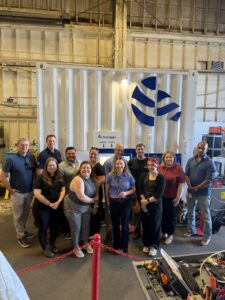
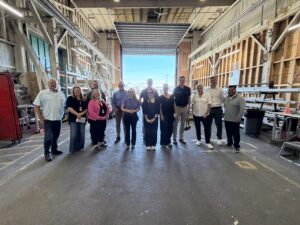
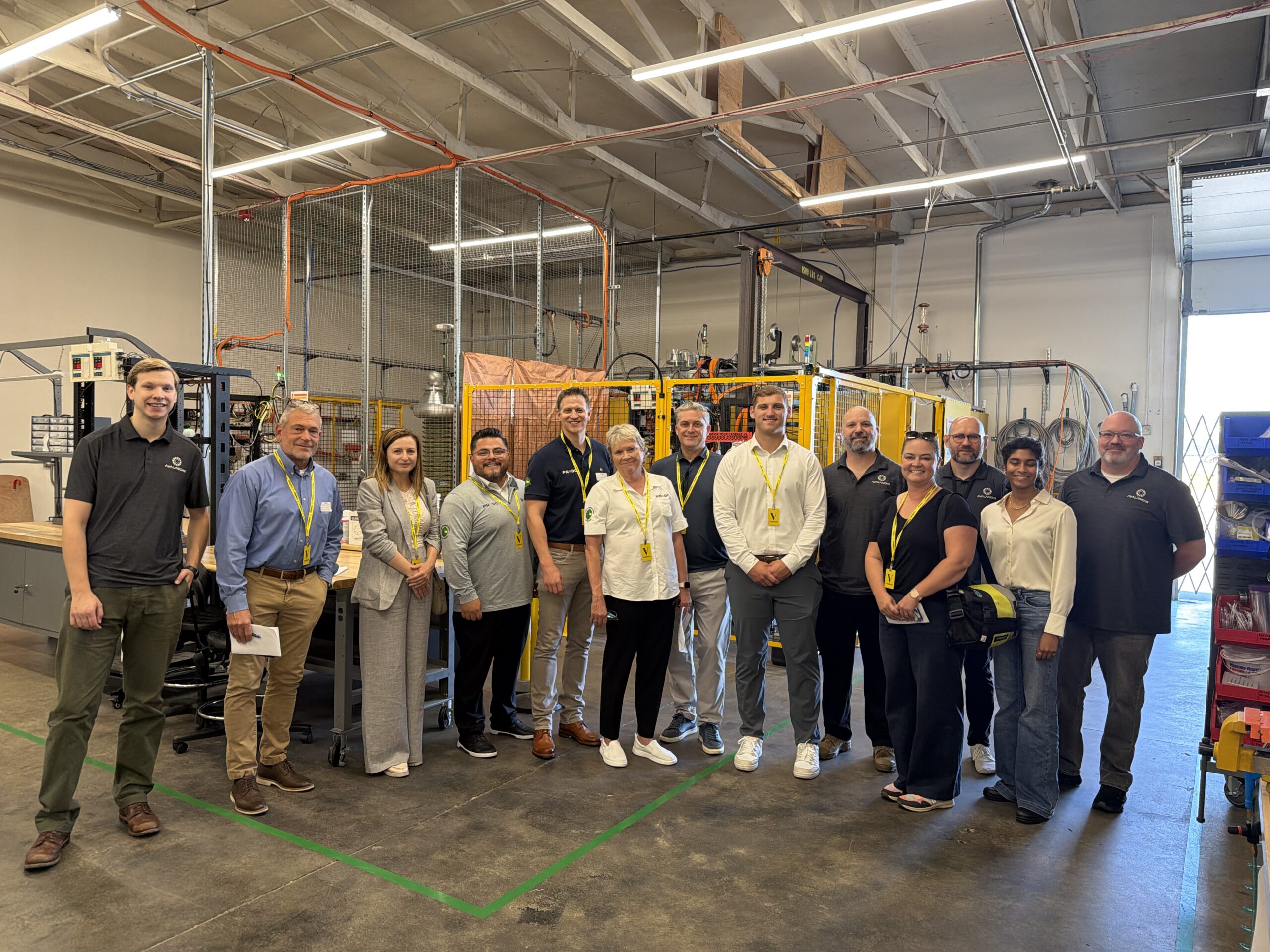
On August 20, the Northwest Tech Bridge (NWTB), together with the Pacific NW Defense Coalition (PNDC), brought congressional and Department of Commerce staff together for a firsthand look at the companies, technologies and people shaping Washington’s defense innovation ecosystem, and explore the connections to current and emerging U.S. Navy and Defense needs.
The roadshow offered a behind-the-scenes look at how Washington companies can connect with the Navy’s broader technology and acquisition ecosystem, and how NWTB helps build the connections needed to move promising technologies toward use by the fleet.
The day began at the Pacific Northwest Mission Acceleration Center (PNW MAC) in Renton, which set the stage for the roadshow and provided an introduction to the broader Tech Bridge mission. As a hub for defense innovation in the Pacific Northwest, the PNW MAC brings together startups, industry, academia and government partners to accelerate solutions to national security challenges. From there, the group visited five Washington companies, each representing a different piece of the state’s diverse technology and defense industrial base.
PowerLight Technologies
The first stop was PowerLight Technologies in Kent, where participants learned about the company’s work developing wireless power-beaming and Power-over-Fiber systems. Using laser technology to safely transmit electricity without traditional cables, PowerLight is exploring applications across defense, aerospace, maritime and autonomous systems. Its technology has the potential to extend the operating time of unmanned systems, power remote sensors and underwater equipment, and deliver mission-critical power where conventional infrastructure is difficult to deploy. With technology demonstrated for organizations including NASA, DARPA and the U.S. Department of Defense, PowerLight offered an early example of how emerging technologies can address some of the military’s most challenging operational needs.
Avalanche Energy
The roadshow then continued to Avalanche Energy in Tukwila, where the group saw a very different approach to a longstanding challenge: fusion energy. Avalanche is developing compact, modular fusion systems called Orbitrons, taking an approach designed to make fusion technology smaller, faster to develop and potentially easier to deploy than traditional large-scale fusion facilities. Beyond the long-term potential of fusion energy, the company is also exploring applications for the high-energy neutrons produced by its systems, including advanced materials testing and defense-related uses. The visit demonstrated how technologies developed for future energy needs can also have implications for national security and advanced research.
SEKISUI Aerospace
At SEKISUI Aerospace in Renton, the focus shifted to Washington’s world-class aerospace and advanced manufacturing capabilities. The company designs and manufactures advanced composite structures, systems and components for commercial aerospace and defense customers. Its work combines advanced materials, automation and precision manufacturing to produce components ranging from aircraft interior structures and cargo liners to engine components and structural assemblies. The visit provided a look inside the sophisticated manufacturing capabilities that support Washington’s aerospace supply chain—and the skilled workforce and advanced technologies needed to keep that industry competitive.
SAFE Boats
The afternoon continued at SAFE Boats in Tacoma, where the group saw firsthand how Washington’s maritime manufacturing sector supports government, military and public-safety missions. SAFE Boats designs and manufactures high-performance aluminum vessels used for maritime security, law enforcement, search and rescue, firefighting and military operations. Touring the company’s operations brought the defense industrial base into clear focus: innovation is not limited to laboratories and startups. It also happens on the factory floor, where engineering expertise, skilled manufacturing and decades of experience come together to build equipment relied upon in demanding environments around the world.
Aquagga
The final stop was Aquagga in Tacoma, where the group learned about the company’s innovative approach to one of today’s most persistent environmental challenges: PFAS contamination. Aquagga is developing hydrothermal water-treatment technology designed to destroy PFAS and other persistent contaminants rather than simply capture them, offering potential applications for contaminated water, industrial wastewater and difficult environmental cleanup projects. The visit also demonstrated how technologies developed to address environmental challenges can have important applications for federal and defense customers, particularly in areas such as water treatment, waste management and PFAS remediation.
Connecting PNW Innovation with Navy needs
Although the five companies operate in very different fields, the visits revealed a common thread: Washington has the talent, technology, and manufacturing capabilities to help address complex Navy challenges.
The NW Tech Bridge helps turn that potential into progress by connecting companies with Navy stakeholders, mission needs, and pathways into the War Department. The roadshow gave congressional and Commerce staff a firsthand look at what that role means in practice—and why sustained connections between innovators, government, and the fleet matter.
The breadth of Washington’s capabilities is hard to miss. Companies across the state are actively developing technologies that are relevant to the Navy. Our role is to help the Navy find them—and help those companies understand how to engage.