
OUR IMPACT
Explore the full impact report to see what we’ve built together.
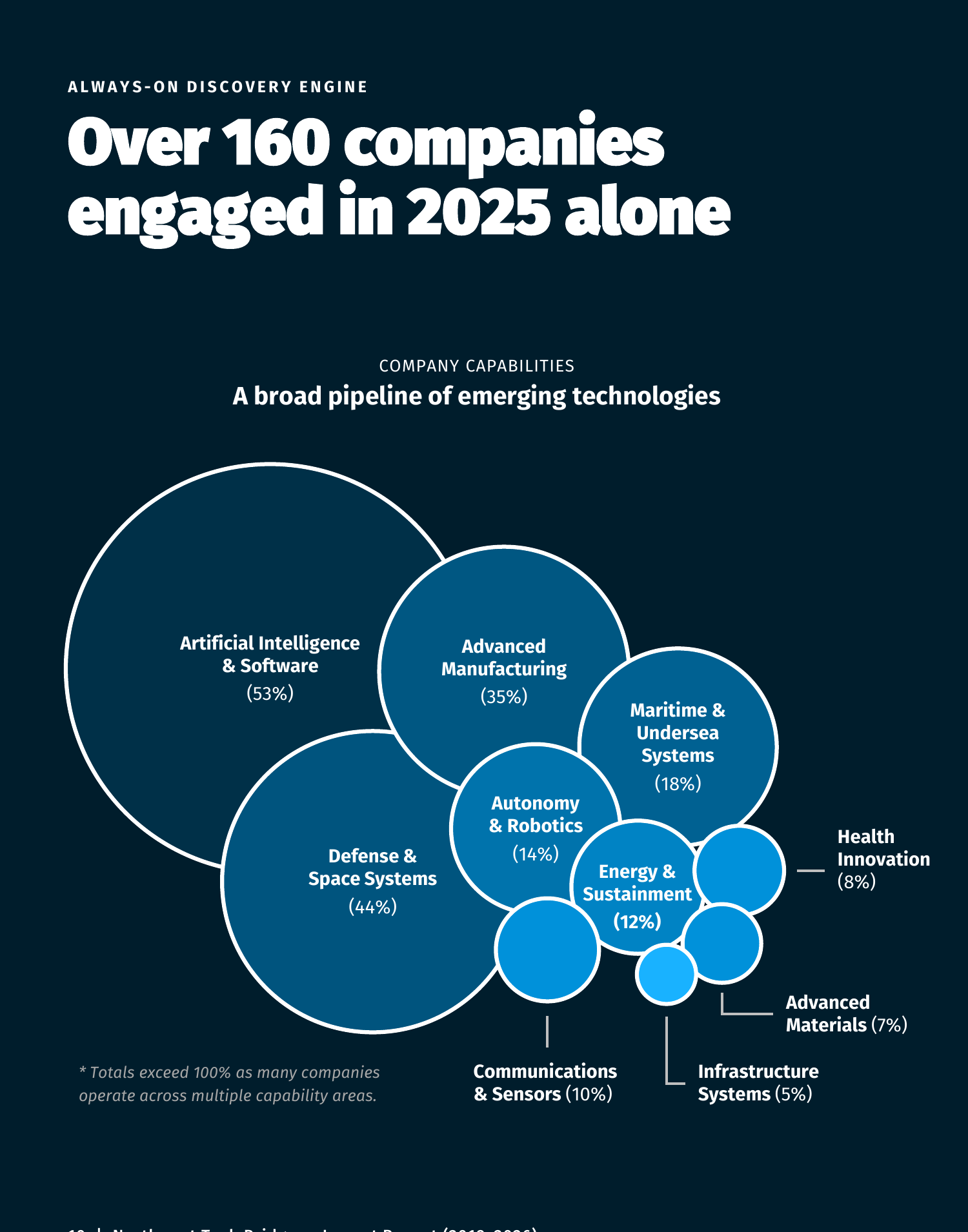
Since 2019, the Northwest Tech Bridge has been the region’s front door between the U.S. Navy and the Pacific Northwest’s most promising innovators — helping early-stage startups and “garage innovators” become defense-ready partners. This is a look at what that work has built and what it means for the future of national defense.

See the impact
Hear directly from the innovators and Navy partners the Tech Bridge has connected.
What this work has meant for the Navy
Four outcomes anchor the impact story — from first contact with an early-stage innovator to a validated, deployable capability.
Greater Innovation Access
Expanding the range and depth of naval capability for the modern warfighter.
Faster Capability Delivery
Advancing early-stage technologies through proven pathways to speed up transition.
Lower Transition Risk
Validating new technologies through a leading regional ecosystem before procurement.
Improved Regional Growth
Connecting regional innovators to Navy demand signals for investment and growth.
"Our team at the warfare center is really trying to support the organic industrial base within the NAVSEA community ecosystems. Being able to interface with all these companies at different technical readiness levels and bring that all together to provide a useful solution that can be moved into production is key to readiness for the Navy."
— Bryce Weber, Platform Endurance + Readiness Technology Lead, NUWC KeyportA full-stack regional ecosystem
The Tech Bridge doesn't work alone. It connects innovators to a network spanning mentorship, capital access, technical support, infrastructure, defense procurement, and market transition.
"Your success goes up when you're in person. By giving the Navy that geographic extension into the different regions, it allows us to pass on the things that are ready for the Navy to line them up against a warfighting need."
— Aaron Darnton, Chief Technology Officer, NUWC KeyportInnovator stories
Four companies the Tech Bridge has helped move from early concept toward deployable capability.
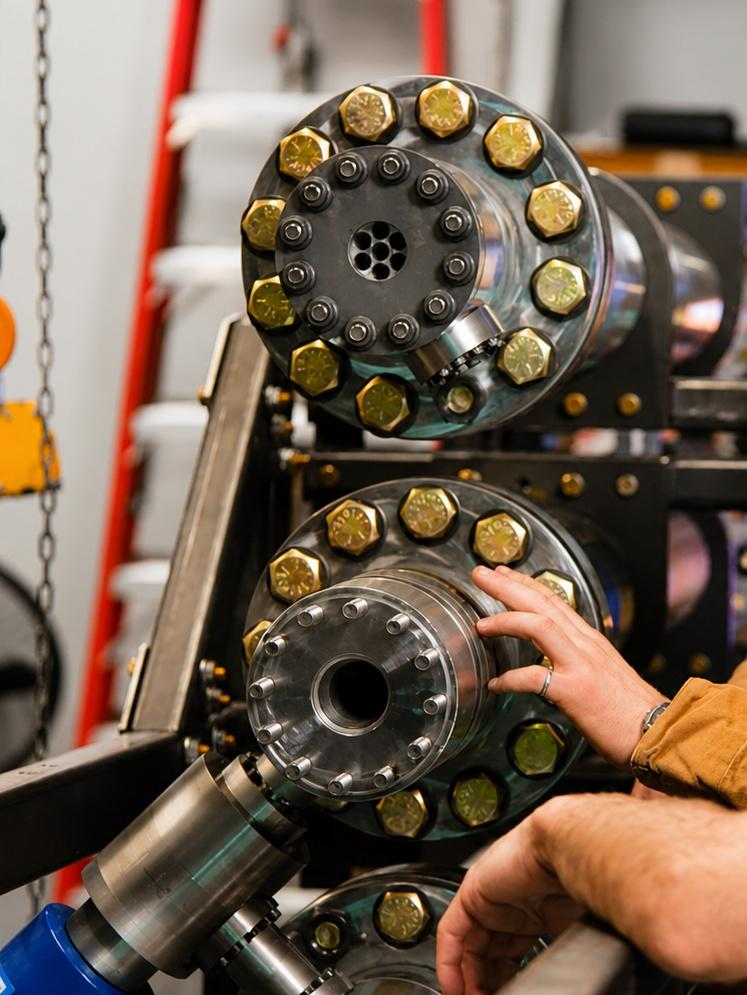
Wave Motion Launch Corporation
Developing the Solid Jet Gun, a directed kinetic energy technology for counter-drone defense and hypersonic projectile acceleration.
Read the story →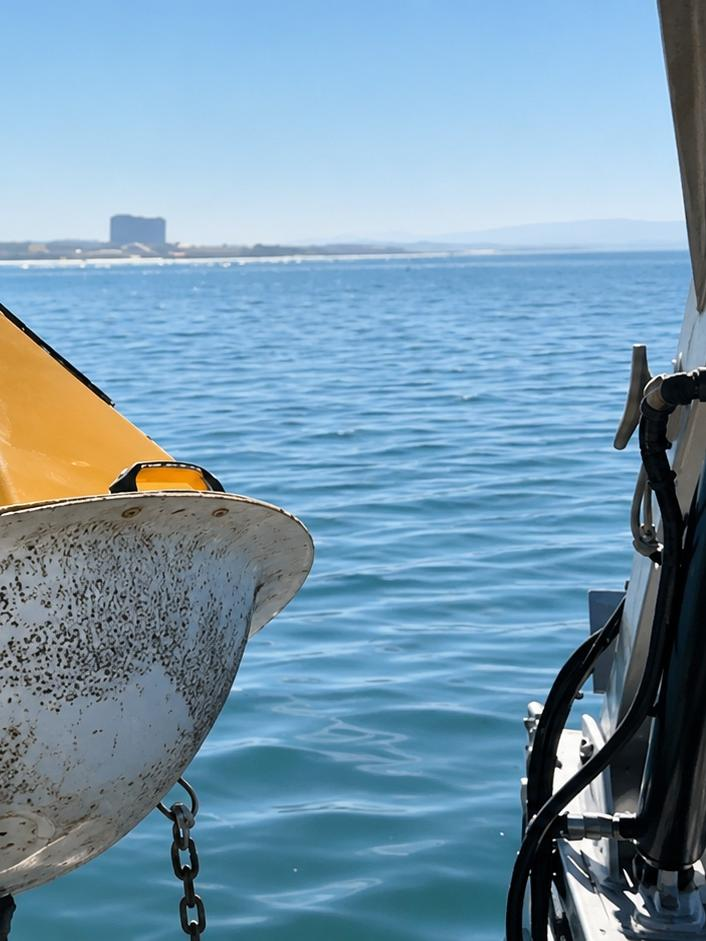
HyperKelp
Scalable, buoy-based sensing platforms that detect and monitor threats across ocean environments, including hypersonic tracking.
Read the story →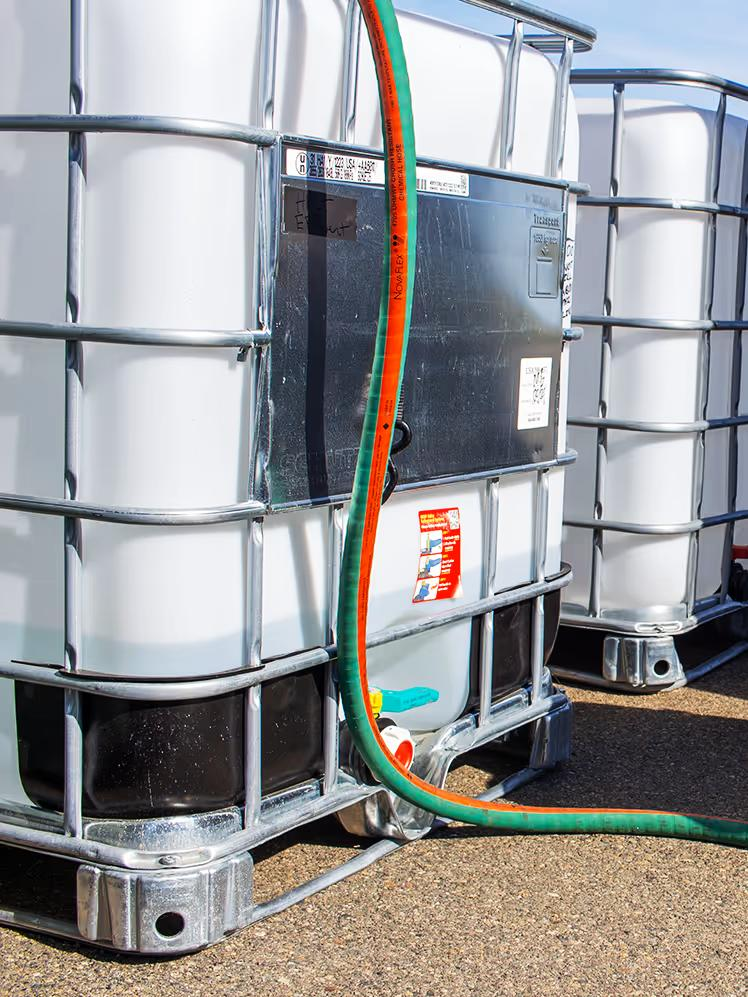
Aquagga
Destroying toxic PFAS "forever chemicals" on-site with patented Hydrothermal Alkaline Treatment technology.
Read the story →
Khasm Labs
Secure AI, private 5G, and edge computing for mission-critical defense, ports, and infrastructure applications.
Read the story →How the Tech Bridge works
A three-phase pathway that moves companies from early concept to deployable capability.
Learning
Innovators refine their value proposition, complete required registrations, and identify early-stage funding such as SBIR/STTR.
Growth
Companies validate their technology by engaging Navy experts, accessing testing environments, and building partnerships.
Delivery
Companies identify contracts and customers, and transition their technology into deployable, integrated capability.
Lessons from seven years
The innovation is out there.
The Pacific Northwest is one of the most concentrated hubs for emerging technology in the country — and much of it has never engaged with the Department of Defense before.
Getting there early matters.
Startups are most willing to adapt their technology in the earliest stages — which is exactly when the Tech Bridge engages them.
Relationships start on the ground, not in a portal.
Founders who won't engage through online portals will engage through a trusted regional network.
One technology is rarely the whole answer.
The biggest barrier isn't discovery — it's integration. Sometimes that means helping a technology mature; sometimes it means connecting several into one system.
Moving fast takes a coordinated ecosystem.
The Tech Bridge's role is to be the connective tissue that holds the regional ecosystem together.
"The Northwest Tech Bridge has demonstrated what is possible when government, industry, and entrepreneurs work together around a shared mission… now is the time to sustain and strengthen this work."— Denise Ryser, President + CEO, Pacific Northwest Defense Coalition