
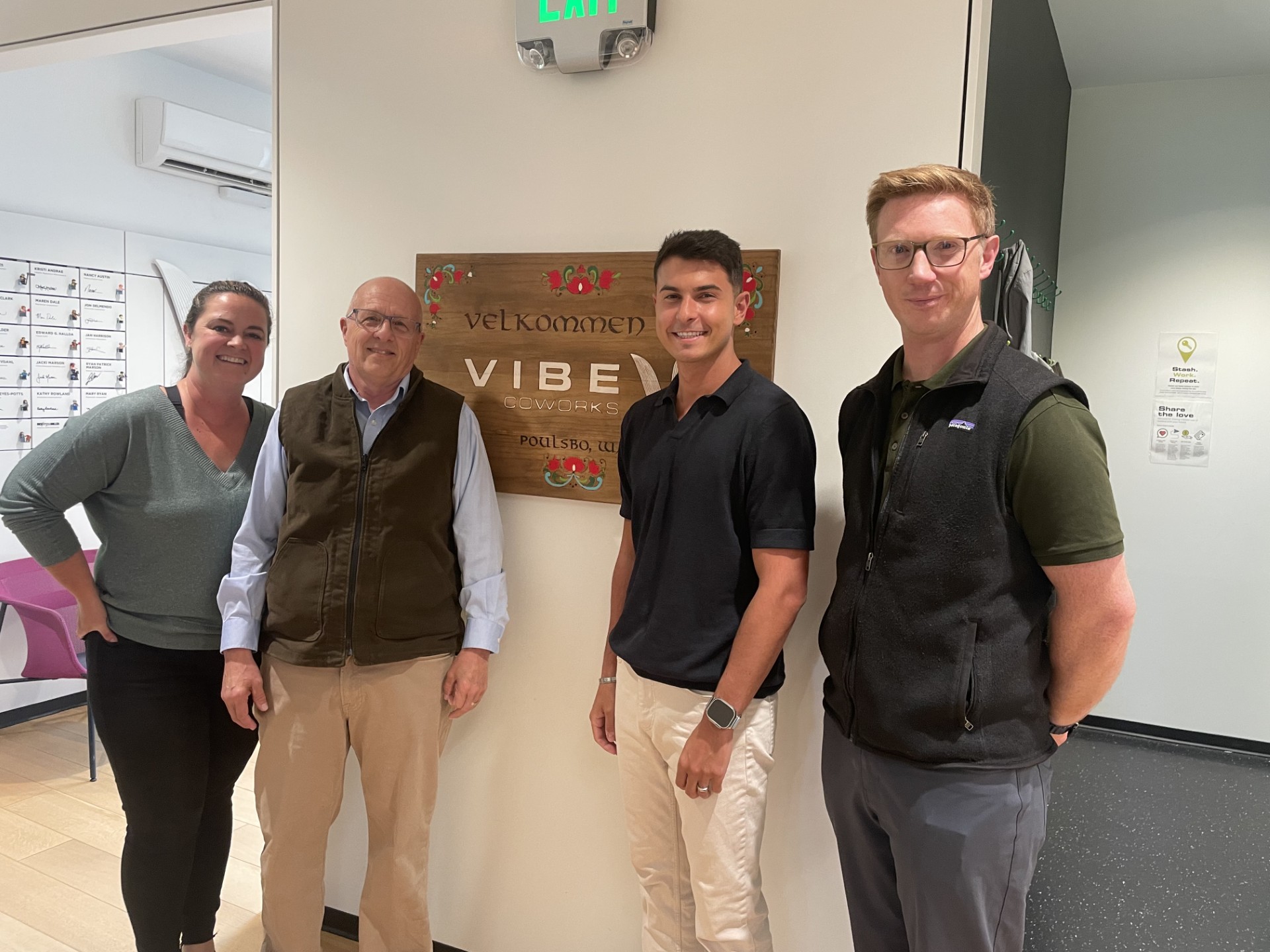
APEX and NW Tech Bridge unite ecosystems to accelerate technology transition
NW Tech Bridge turns partnerships into practical pathways for innovation, which is why the Academic Partnership Engagement Experiment (APEX) fits naturally within its ecosystem.
As an innovation connector, NW Tech Bridge supports small and medium-sized businesses with ambitious ideas by providing access to funding, government customers, and key collaboration networks. It guides companies through nontraditional federal R&D pathways, helping move technologies from concept to commercialization while addressing real-world defense challenges. The focus goes beyond funding to ensuring innovations are seen, tested, and adopted.
APEX complements this mission by strengthening the front end of the innovation pipeline. It bridges academia, industry, and defense, connecting promising research with real operational needs. Acting as both connector and translator, APEX aligns cutting-edge university and lab ideas with practical defense applications. Together, NW Tech Bridge and APEX create a more complete innovation ecosystem: NW Tech Bridge helps businesses navigate opportunities and bring solutions to life, while APEX expands and diversifies the flow of ideas entering the system. The result is stronger collaboration, broader access, and a faster path from innovation to impact.
In this Q&A, we explore how the APEX + NW Tech Bridge partnership is advancing innovation across the defense ecosystem.
Can you describe the Academic Partnership Engagement Experiment (APEX) program and its goals? How did the program get started?
The Academic Partnership Engagement Experiment (APEX) is a Partnership Intermediary Agreement (PIA) with the Department of the Air Force. The program’s goal is to accelerate innovation by connecting academic researchers, industry innovators, and the Department of Defense (DoD) to solve critical defense challenges. APEX cultivates relationships across academia and the defense industry to transition technologies from research to operational capabilities for DoD.
APEX was established in alignment with the DAF’s Science & Technology 2030 Strategy, which recognized the need to bridge the gap between defense requirements and academic research. This initiative seeks to remove barriers to collaboration, fostering innovation ecosystems that produce transformational technologies to meet the DAF’s and DoD’s evolving operational needs.
What is the APEX Process and how does the program facilitate Technology Transition?
The APEX Process focuses on guiding academic researchers, small businesses, and innovators through government innovation pathways, including SBIR/STTR (Small Business Innovation Research / Small Business Technology Transfer) programs and other transition mechanisms. It delivers education, coaching, and connection services that help these innovators align their technology and research with Air Force and Space Force needs. The goal is to transition promising technologies from concept to commercialization, with a focus on aligning with Air Force operational imperatives.
APEX facilitates technology transition by leveraging its extensive network to identify collaborative opportunities. Through personalized consultations, educational resources, and targeted matchmaking, APEX empowers innovators to understand the government contracting and funding landscape, increasing their likelihood of securing SBIR/STTR funding and integrating successfully into the DAF ecosystem.
How do APEX and NW Tech Bridge collaborate on initiatives? / How does NW Tech Bridge fit into the APEX program’s mission?
APEX and NW Tech Bridge work together to accelerate innovation by connecting non-traditional entrepreneurs with Department of Defense (DoD) partners. By cultivating ecosystems that provide entrepreneurs and startups with resources, mentorship, and opportunities, both organizations empower these innovators to develop and deliver cutting-edge technologies that address critical national security challenges. This partnership amplifies APEX’s mission by fostering collaboration across academia, industry, and government.
What services or resources does APEX provide academic researchers and innovators throughout the U.S.A.?
APEX offers a variety of services designed to help academic researchers and innovators navigate the complexities of defense-related innovation and technology transition. These include:
- Coaching: One-on-one guidance through the SBIR/STTR application process, proposal writing, and submission.
- Matchmaking: Connecting innovators with relevant stakeholders in the Department of the Air Force, academia, and industry to explore potential collaborations and partnerships.
- Workshops and Webinars: APEX organizes and shares events that educate and inform innovators about government funding programs, proposal best practices, and technology transition pathways.
- Access to Resources: APEX provides access to valuable tools and databases, helping researchers identify funding opportunities, understand defense capability gaps, and align their technology solutions with Air Force needs.
How does APEX identify innovators and technology opportunities?
APEX identifies innovators and emerging technology opportunities through a multifaceted approach. The team actively engages with universities, research institutions, and industry through events, partnerships, and direct outreach. By leveraging relationships with organizations like NW Tech Bridge, APEX taps into a diverse pool of innovators. Additionally, through its coahcing services, APEX identifies promising technologies that align with DAF needs, guiding innovators through the SBIR/STTR process and facilitating potential transition opportunities.
Can you share a success story that highlights the value of APEX?
APEX has been instrumental in helping innovators bridge the gap between research and defense acquisition, resulting in 31 Phase III contract wins. By offering mentorship, networking opportunities, and commercialization assistance, APEX enables small businesses and academic teams to transition their technologies from research stages into viable defense applications. Through its coaching services, APEX simplifies DoD engagement for SBIR/STTR participants, ensuring their solutions meet military requirements and foster sustainable growth in the defense sector.
For example, San Francisco-based Krtkl Inc. has achieved multiple SBIR/STTR awards with APEX’s support. The combination of APEX’s coaching and matchmaking services has empowered Krtkl to access non-dilutive federal funding and connect with collaborators, helping them navigate the DoD’s complex landscape to advance their technologies.
How do you see APEX evolving in response to the changing landscape of academic partnerships?
As the landscape of academic partnerships evolves, APEX aims to expand its impact by strengthening existing relationships with universities and research institutions while establishing new connections. With the defense sector’s priorities constantly shifting, APEX is dedicated to adapting by offering new resources and fostering even more collaborations among academia, industry, and government. APEX’s goal is to remain at the forefront of identifying and transitioning cutting-edge technologies to meet the DAF’s future operational needs.

About Academic Partnership Engagement Experiment (APEX)
APEX cultivates innovation by expanding the American research enterprise for the Department of the Air Force by engaging, connecting, and enabling innovators across academia, industry, and the Department of Defense. APEX utilizes data analytics to identify transformational operational defense solutions in academia, industry, and government sectors; provides process navigation services for academic teams and small businesses and enhances cross-sector engagement by providing direct connections to the technology needs of multiple Department of Defense programs. Learn more: www.apex-innovates.org.